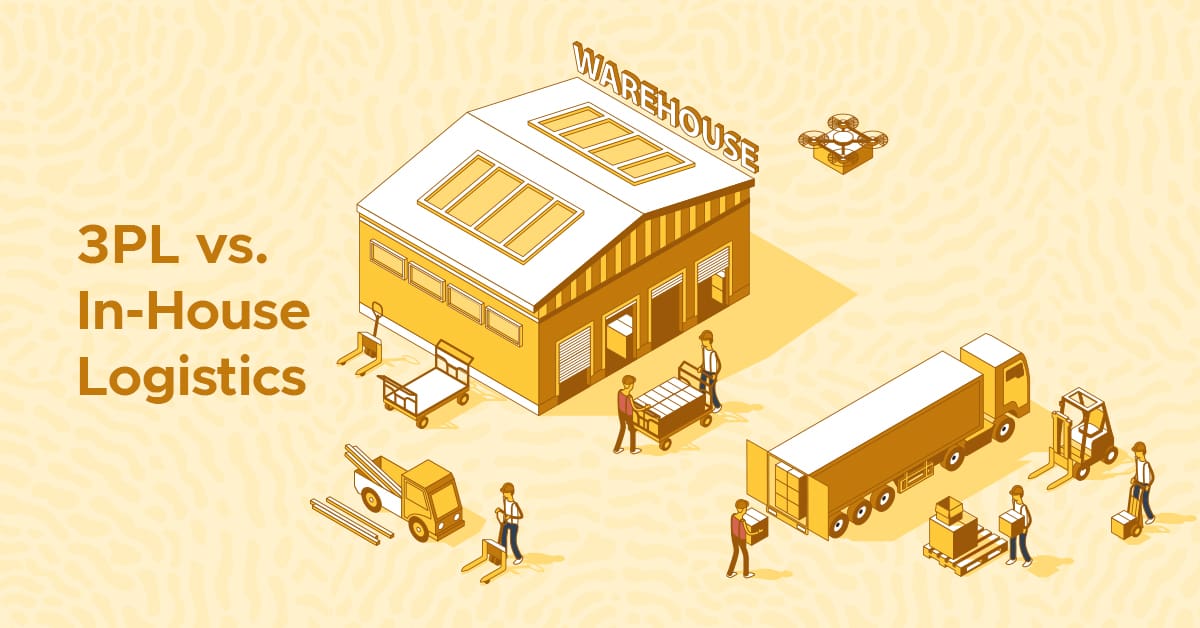
3PL vs In House Logistics: Which Is Best for Your Brand?
Logistics is the final step in the fulfillment process, and it can make or break your business. Customers may love your product, but if it arrives late, damaged, or is lost in transit, the buyer experience immediately suffers. Worse, it can lead to negative reviews and lost profits.
More than simply moving goods, logistics ensure customer satisfaction and maintain trust. Buyer behavior reinforces the importance of this key role, with 85% of U.S. consumers saying they wouldn’t shop with a retailer again after a bad delivery experience. That means choosing whether to outsource logistics or handle this element yourself is critical for your business.
In this article, we’ll break down the two most common options for logistics: in-house or outsourced to a 3PL, their pros and cons, and share insights to help you decide which is best for your business.
What is a 3PL?
First, let’s address the terminology. A 3PL provider, which stands for third-party logistics provider, refers to an outsourced partner that handles eCommerce logistics such as inventory management, fulfillment, and warehousing.
This partnership can help your business, especially as 84% of consumers won’t shop with a brand again following poor delivery service, even if all the other purchase points are spot on.
An overview of in-house logistics
In-house logistics involve managing your business’s fulfillment operations entirely on your own. Your team takes charge of every step in the process, from storage and packing to delivery. The advantages of this approach are:
- Complete control over the fulfillment process: One of the greatest appeals of managing logistics internally is the level of control it gives you; you call the shots on how your products are handled, packaged, and shipped. This approach is ideal if you’re particular about your services and want things done a specific way. You maintain full oversight so everything aligns with your vision and standards.
- Direct engagement with customers: Since you directly manage the logistics process, you can address customer concerns and create a more personalized buyer experience. This is a valuable opportunity, as studies show 93% of consumers have a high chance of returning to buy again from companies with excellent customer service.
- Cost savings (business dependent): When you rely on third-party logistics providers, you pay for their services and fees. Handling logistics yourself, therefore, can be more affordable if you already have the necessary assets and resources. With this strategy, you avoid additional costs and can focus on optimizing your logistical capabilities.
Despite the above-mentioned benefits, in-house fulfillment does have its drawbacks:
- Significant up-front investment: Building and maintaining a logistical system requires you to invest time, money, and space right from the start. You’ll need to hire a dedicated team and secure the necessary resources (i.e., equipment, software, and even warehouse space) to ensure everything runs smoothly.
- Difficult to scale efficiently: As your business grows, your fulfillment needs will naturally expand as well. While managing logistics internally lets you control the delivery process and post-purchase service, it can quickly become inefficient as demands increase. What was once manageable may soon strain your resources.
- Time-consuming: Overseeing logistics can divert your attention from other critical business aspects. It splits your energy and can bog you down in storage, packing, and shipping details. This hinders your ability to grow and innovate in the areas that truly matter to your brand.
- Lacks specialized expertise: Logistics can be challenging, especially if you don’t have the experience or knowledge of the tools necessary to manage the process effectively. It can quickly become overwhelming and challenging to navigate without relevant expertise.
An overview of third-party logistics
With third-party logistics (3PL), a business outsources their fulfillment operations to an external provider that handles everything from warehousing and inventory management to order fulfillment. The provider acts as an extension of your business, specializing in shipping your products where they need to go.
The 3PL option can help your business scale or streamline operations and brings several enticing pluses:
- Fewer overhead costs: With a 3PL, you avoid the hefty logistics costs of owning warehouses, hiring staff, and maintaining shipping infrastructure. This means fewer financial headaches and a greater focus on growing your brand.
- Wider business reach: Third-party providers have established networks to help you reach new markets quickly. Working with a 3PL opens more options and opportunities to expand without having to build those connections yourself.
- Growth driver: A 3PL can seamlessly scale with you as your business grows. Whether you fulfill ten orders or ten thousand, they have the capacity and resources to meet your needs — without requiring you to make major investments or adjustments.
- Access to industry expertise: A 3PL’s core strength is logistical expertise. You’ll find skilled professionals who can help you navigate the latest technologies and strategies in the industry.
However, like its in-house counterpart, this method has some challenges:
- Less control: Partnering with a logistics provider means entrusting them to manage your fulfillment process using their established systems. As long as you remain a client, you’ll have less control over how they operate. You can give feedback, which they may consider, but aren’t always obligated to follow.
- Misalignment risks: Your brand’s values and standards may not always align perfectly with a 3PL’s practices. Differing priorities can sometimes cause friction and make it difficult to maintain a seamless customer experience.
- Ongoing costs: While a 3PL can save on up-front expenses, these providers do charge recurring fees. Over time, those costs can add up, so it’s crucial to evaluate whether the return on investment aligns with your business goals and overall budget.
Differentiating factors between 3PL vs in-house logistics
Choosing whether to adopt 3PL vs in-house logistics is a crucial decision that affects the trajectory of your business. To aid your decision-making, here are some key considerations to pinpoint which strategy fits your brand’s needs.
1. What best accommodates your budget?
Cost is often the first thing businesses consider. But if you already have the resources to build your logistics internally and don’t mind the responsibility, go for it. However, keep in mind the initial investment can be steep, and ongoing maintenance costs can increase.
Teaming up with a 3PL eliminates the need for large up-front expenses, making it a more affordable option for businesses looking to keep overhead low. However, 3PL services also come with recurring fees.
2. How much authority do you want?
With complete control over the entire logistical process, you can tailor operations to match your brand’s values and standards. But that also brings greater responsibility, as you’ll have to handle every challenge that arises.
Partnering with a 3PL requires you to relinquish some control over your fulfillment. While this can free you to focus on other areas of your business, it necessitates trust in your provider to uphold your brand’s standards and values effectively.
3. Do you need expert help?
When you manage logistics on your own, you have to contend with the complexities of supply chain operations. It’s a steep learning curve, especially if your team has no prior experience. A 3PL, however, can bring industry knowledge and expertise to the table. They know the nuances of logistics and use cutting-edge tools and best practices to simplify your fulfillment.
4. Can you grow easily?
In-house operations often require significant resources. This can be challenging and expensive, especially during periods of rapid growth. On the other hand, most 3PLs are built for scalability. They can help you handle sudden spikes in demand or expand into new markets without additional investment.
How a 3PL benefits your eCommerce business
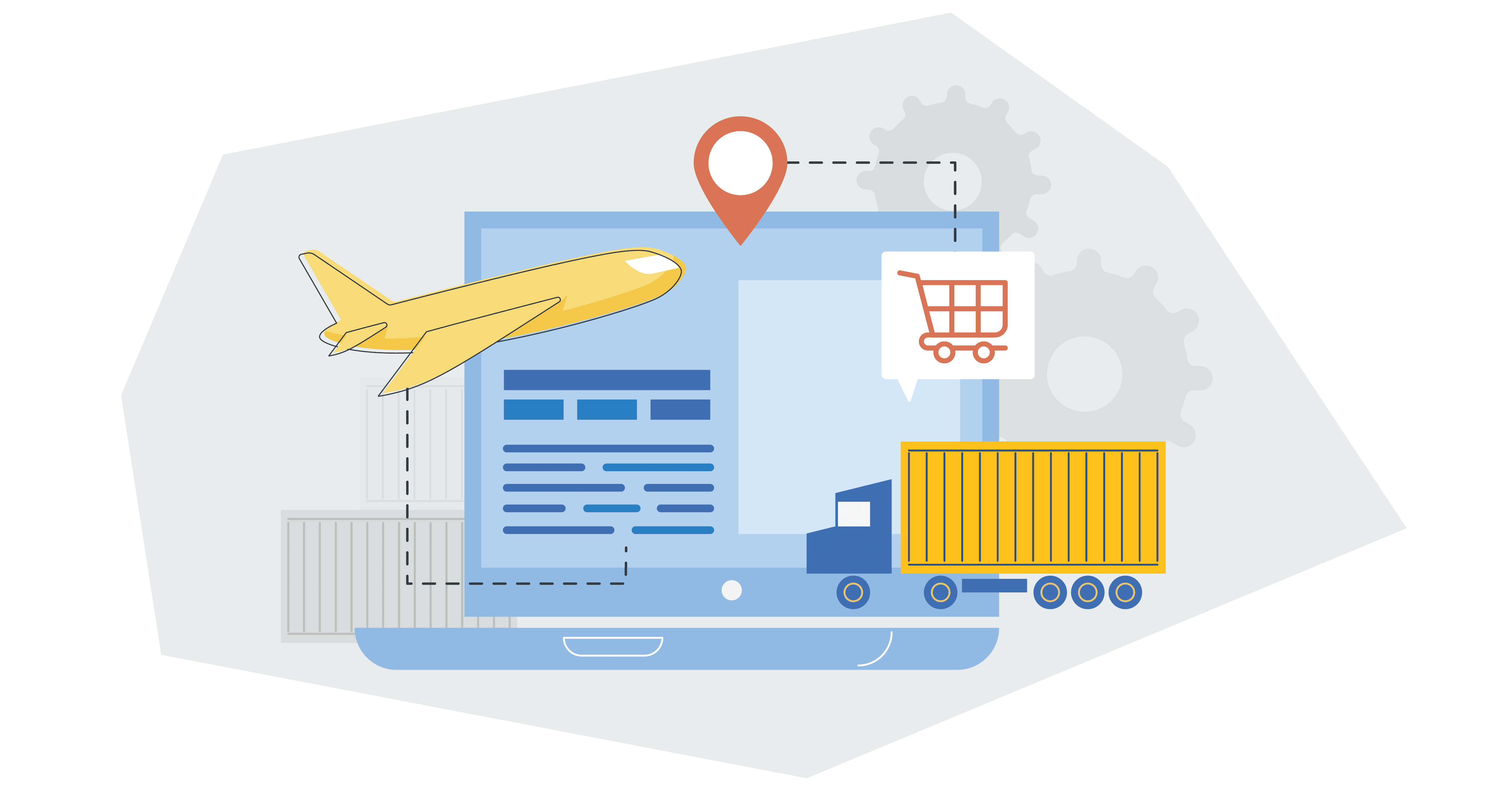
In addition to customer satisfaction, a 3PL can benefit your eCommerce business by helping to…
1) Reduce your overhead costs
Partnering with a 3PL provides several cost-saving advantages that can benefit your business.
For example, storage is one of the largest costs associated with retailers. With a 3PL, these overheads can be drastically reduced.
A 3PL removes the need to rent or buy warehouse space. This eliminates the cost and need to oversee operations, labor and technology associated with in-house fulfillment.
In addition, 3PLs use their expertise to streamline processes, which leads to reduced expenses. For example, many 3PLs have multiple locations which enables them to ship from the location closest to the customer, reducing shipping costs.
Furthermore, 3PLs have partnerships with shipping carriers, resulting in discounted shipping prices which you can pass on to your customers.
In conclusion, the reduced costs by partnering with a 3PL, by eliminating the cost of overheads required to run an in-house fulfillment center, labor, management, technology and shipping costs, far outweigh the long-term savings compared to trying to tackle all of the above alone.
Not to mention these savings can be passed onto your customers along with higher customer satisfaction which can, in turn, increase your customer lifetime value (CLV) and average order value (AOV).
2) Broaden your reach
3PL partnerships can broaden and expand your reach with their extensive network of both national and international fulfillment centers.
This distributed network is an important factor to note and compare when choosing your 3PL. Expanding your reach not only opens the flood gates to the global digital buying market, amounting to over two billion buyers, but it also opens up reduced shipping costs. This is particularly important for international orders.
On top of higher shipping costs, customs duties and taxes can be costly and add on extra transit time. The expansive network of centers helps keep costs down, shipping times fast and customers happy. The world really is your oyster.
3) Streamline growth
Growth and expansion is the goal of most businesses. However, to facilitate this growth, you need to ensure that you are equipped with the resources to sustain the demand.
3PLs are experts at handling logistics associated with company growth and, as mentioned above, can help your business broaden its reach with their extensive network of fulfillment centers.
In addition, outsourcing repeatable tasks, like fulfillment and inventory management, frees up time to allow you to focus on the tasks that will directly facilitate growth in your business.
4) Access industry expertise
With logistics and shipping professionals who are experts in their field and knowledgeable on the latest trends in the industry, 3PLs allow you to tap into their expert knowledge.
Not only do they have the expert knowledge, but they also have the partnerships, resources and networks required to constantly improve efficiency, reduce costs and optimize processes.
Wrapping up — Enhance your logistics strategy with MyFBAPrep
Both 3PL vs in-house logistics are strong options for fulfillment, so the choice comes down to your specific business circumstances. The former gives you control and, with the right resources, can save you money. Meanwhile, the latter is perfect for companies that want flexibility, scalability, and expert help without significant up-front costs.
Factoring in decisions like business size and direction, pricing, warehouse locations, shipping requirements, product requirements, and business objectives, it’s important to carefully choose a 3PL that can meet and support your business goals. The right partnership can excel your company’s growth, broaden your reach, and drastically reduce your costs.
At MyFBAPrep, our goal is to make fulfillment effortless for you. Connect with our team today and learn how our experts will handle the time-consuming complexities of logistics so you can focus on growing your business.
Published: April 3, 2025
Updated: March 10, 2026