

12 Common Amazon Seller Mistakes and How to Avoid Them
Boasting a $705.65 billion valuation, an estimated $162,360 million from first-party sales, and an expected 40% share of the U.S. market’s eCommerce sales in 2022, Amazon is the epitome of eCommerce success.
While the titan leads the pack in U.S. eCommerce, getting ahead in its massive marketplace is challenging and can incur costly mistakes without the right approach.
So, what can you do to minimize Amazon selling blunders?
Despite its reputation, Amazon is no longer the platform where you can list umpteen products and make a killing. Yet many sellers simply jump in without acquiring the critical skills and traits necessary to get their stores off the ground.
In this post, we’ll spotlight the seller weaknesses that lead to mistakes on Amazon and the most common errors they make. We’ll also share tips and tricks to help you dodge marketplace suspensions and thrive online.
Amazon’s rules are constantly changing. Stay compliant with MyFBAPrep.
12 Costly Amazon seller mistakes to avoid
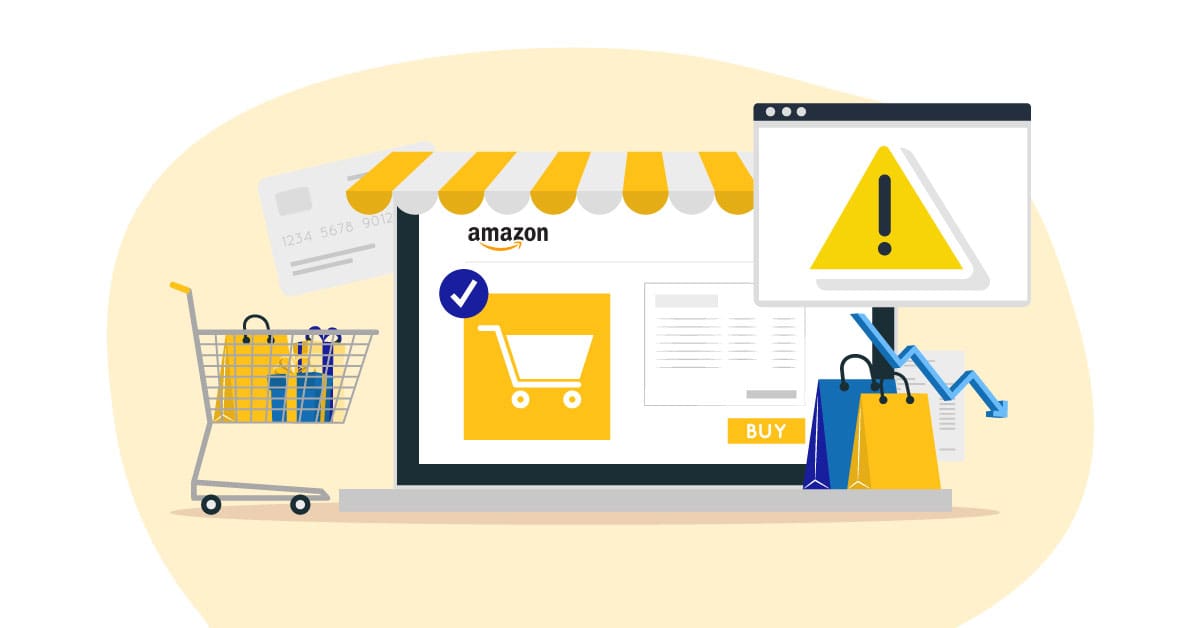
To help you boost your Amazon selling prowess, we’ve broken down some of the most expensive errors to avoid.
1) Getting lax on the rules
Amazon is notoriously strict, and they can and will suspend any sellers they suspect aren’t following the marketplace rules. Unfortunately, their rules are also always changing, which means sellers must constantly stay up-to-date on the latest rules to avoid Amazon suspensions.
From the category you list your product in, to the items you send to their warehouses, everything must follow a strict protocol. For example, Amazon has non-negotiable requirements about how you pack goods, detailing maximum box measurements and imposing the infamous drop test.
Amazon constantly changes, and you as the seller have to keep up. You can stay up to date on your obligations in a number of ways, such as regularly reading Amazon’s Terms of Service or reviewing their Seller Central Resources for updates on essential areas like IPI scores, inventory limits, inbound shipment rules, and product restrictions. Whatever your style of consuming content and learning, develop a habit of checking and implementing the latest Amazon intel.
The strict rules may seem excessive, but they’re meant to maintain a high standard for their customer experience. If you fail to meet the requirements, things can turn sour fast. Getting suspended on Amazon costs you revenue (all the money you would have made otherwise) and can make you lose the high rankings you worked hard for.
Learn what Amazon expects of you for every product type to make adequate preparations and sell the items on the marketplace unhindered (e.g., fragile, light, oversized, hazardous goods).
Tip: Watch your emails for announcements, check the Amazon seller app for a quick breakdown of the comms Amazon sends you (and its customers), and monitor your account’s health.
2) Not vetting new suppliers
Not all global suppliers can be trusted, no matter how big they are. If you’re planning on sourcing products from new suppliers, try to work with companies that other sellers have already tried and tested. Start with a small order to check their process and quality, then scale up slowly from there.
3) Not optimizing listings regularly
With more than 6 million Amazon sellers, the competition for customers is fierce. The typical shopper isn’t willing to scroll through dozens of different listings to purchase an item they’re looking for, which means you need to be one of the first to be seen in order to convert.
Listings are your real estate on the Amazon landscape. They’re also an extension of your ads since they act as landing pages, so they need to shine. Create an Amazon listing optimization checklist and make adjustments regularly based on store analytics and customer feedback.
You can protect your progress by using Amazon selling tools to set up alerts to catch problems like intellectual property violations and hijacking.
Also, browse your competitors’ listings to understand what you’re up against, and review listings in other categories and eCommerce platforms for inspiration on ways to make your listings stand out.
It isn’t enough to optimize your listings once in a set-it-and-forget-it manner. You need to update your listings with professionally-shot photographs, accurate descriptions, catchy copy, and competitive pricing.
4) Ordering too much inventory
Some optimistic merchants order a large bulk of inventory without proper demand planning, or looking at sales projections. Sometimes it works out if there are sudden spikes in sales, and those sellers avoid going out of stock.
However, if you over-order and end up with slow-moving stock, you risk paying more to store items that you can’t sell. Amazon also imposes higher fees on items that sit in their FBA warehouses more than one year. To avoid these storage fees, you can move inventory back to your own storage space, but that costs money, too. Another option would be liquidation, but it’s likely that you won’t receive your full investment.
To avoid this, stick to your historic data and use it to guide how much inventory you order and send into the FBA network.
5) Running out of inventory
The opposite problem is also common for many sellers. Sometimes, sellers miscalculate how much inventory they actually need on a sales channel, and don’t send enough in or order enough from their suppliers.
They end up selling out, losing loyal customers, dropping in Amazon search rankings, and missing out on revenue until they can restock.
6) Taking your eye off accounting
Mishandling your accounts can bankrupt your business without anyone noticing, or leave you needing more inventory with no capital to order it. When you’re running an Amazon FBA business, you need to stay on top of your cash flow. You should always know what’s coming in and going out, as well as the aspects of your operations you need to tweak in order to reduce overhead spending.
7) Launching generic, copycat items
Amazon boasts 9.5 million registered seller accounts globally and more than 2.5 million active sellers — and that number continues to grow.
With increasing competition and ad costs on the Amazon marketplace, it’s no longer enough to launch commonplace products. Whether it’s the quantity, quality, or a game-changing feature, every product you put on the Amazon marketplace should be more enticing than what’s already on offer.
8) Making do with underwhelming prep and fulfillment processes
Thanks to Amazon’s next-level supply chain efficiency and world-renowned Fulfillment by Amazon (FBA) service, you have to have an air-tight fulfillment process. Whether you ship via FBA, Fulfilled by Merchant (FBM), or both, you need a strategy to get and stay in stock fast, as well as have goods prepped in compliance with Amazon’s regulations.
If you go the FBM route, it’s wise to use shipping options that emulate what shoppers expect on Amazon, like next- or same-day shipping, time-specific deliveries, and fulfillment notifications.
9) Being strapped for cash
It’s normal for a growing brand to face cash shortages now and then, but frequent ones can stunt your business’s growth. Additionally, Amazon is notorious for slow payouts and increasing selling and ad costs, so it’s crucial to have access to capital to see you through leaner months.
This is especially true for Q4 prep, the holiday season, and other times when your bills for inventory and storage spike. Address cash flow before it becomes an issue.
10) Throwing money at Amazon ads and hoping for the best
Typical ads no longer cut it on Amazon. Thanks to updates like A10 and growing consumer savviness online, you have to refresh your ads regularly to maintain their profitability. This includes assets related to your ads like a listing copy, images, and brand colors.
You’ll need a productive launch strategy to attract and maintain attention to your offer. For example, you could offer a low launch price and raise it gradually (within ToS rules), using Instagram shout-outs to drive traffic and press releases to gain media attention for innovative products.
11) Neglecting to build a brand
Some sellers fail to prioritize branding from the beginning, which is one of the most costly mistakes on Amazon.
In a sea of similar products, branding influences a customer’s decision to buy from one name over another. So, brand your product packaging, build an external website, and grow a social media following to boost your business’s perceived value and sales.
Pricing should also be part of your branding strategy, such as selling your items at premium prices because of their superior quality.
12) Not experimenting and learning
“Experience is the best teacher”, especially on Amazon. Complex listing indexing, affordable currency conversion hacks, and other skills take time to master, and you acquire more knowledge the longer you’re in the field.
Conducting small tests, whether in your product catalog or selling territory, as you learn the Amazon landscape will help minimize your losses and allow you to invest the most capital in what works. Expanding and updating your knowledge about Amazon, including its rules, updates, fees, and tech, is essential for long-term success.
Wrapping up: Avoid these Amazon mistakes for more ROI

Small mistakes like using the wrong color shrink wrap on your palletized shipments or the incorrect dunnage won’t hurt you. But when more significant errors cost you time, money, and sales, it’s time to rethink your approach.
Make sure to avoid these common mistakes to save yourself and your team time, money, and headaches.
If you’re running an Amazon business and need help with logistics, customer service, and account management, get in touch!
Published: July 26, 2021
Updated: March 5, 2026